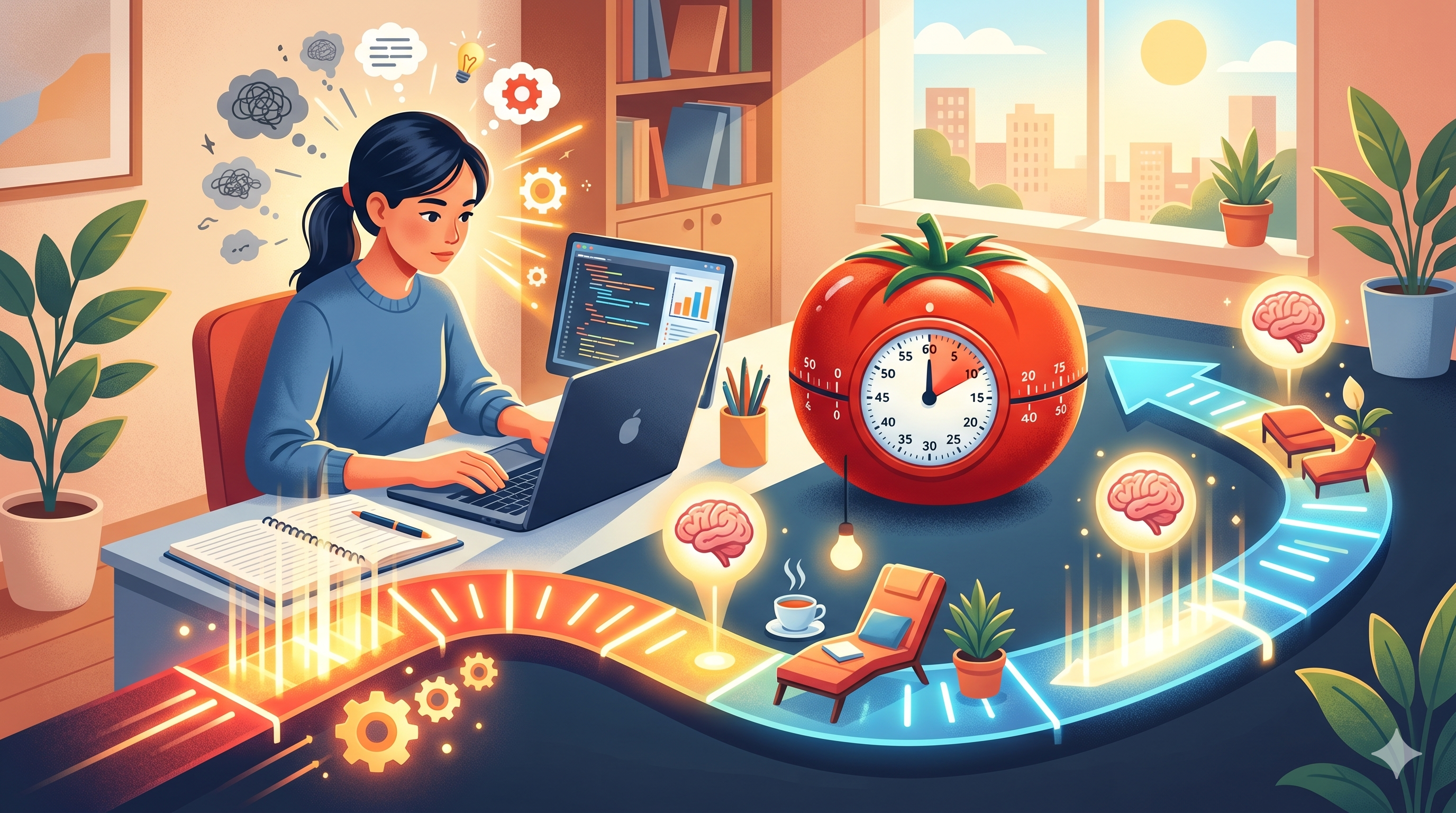
Single-Tasking: Reclaiming Attention in a Tab-Heavy World
Attention is finite, and we spend it carelessly across dozens of open loops. Here is the case for doing one thing at a time, and the small rituals that make it stick.

Open your browser right now and count the tabs. If the number embarrasses you a little, you are in good company. Each tab is a thing you meant to finish, an open loop quietly asking for a sliver of your mind. We have built a working world that rewards keeping everything open at once, then wonder why nothing feels truly done. Single-tasking is the unfashionable answer: hold one thing, finish it, and let the rest wait.
Attention is a finite resource
It helps to think of attention the way you think of any scarce resource. You have a limited budget of it each day, it depletes with use, and it does not refill on demand. Unlike time, which passes at a steady rate no matter what, attention is uneven. The first focused hour of the morning is worth more than the scattered hour after lunch, and far more than the frayed hour at the end of a day spent reacting.
Once you accept that the budget is finite, the central question changes. It is no longer "how do I do more things" but "what deserves my best attention, and how do I keep from spending it on things that do not." Most productivity advice quietly assumes attention is infinite and only time is short. The opposite is closer to the truth.
The cost of open loops
An open loop is any unfinished thing your mind has agreed to keep tracking: the reply you owe, the bug you half-diagnosed, the article you opened and never read. Each one is small. Together they form a low background hum that follows you everywhere, including into the work you are supposedly focused on. You are never fully present because some part of you is still holding all the things you have not closed.
Tab overload is the most visible form of this. Forty open tabs are forty unfinished intentions staring back at you. They do not just slow your machine; they slow you, because every glance at the tab bar is a tiny reminder of everything you are not doing. Closing a tab feels like a loss, but more often it is relief: one fewer thing your attention has to carry.
Practical single-tasking habits
Single-tasking is less a technique than a posture you return to. The habits that support it are unglamorous and that is the point; they are sustainable precisely because they ask little of you in the moment.
- Decide the one thing before you start, and write it down where you can see it.
- Give that one thing a full screen. Hide the dock, the tab bar, the chat window.
- When a new task arrives, capture it somewhere trusted instead of switching to it.
- Finish or deliberately park the current thing before opening the next. No silent abandonment.
Capturing deserves emphasis. Most switches happen because we are afraid of forgetting. A reliable inbox for stray thoughts, one you actually trust, lets you set something down without picking up something else. The mind only insists on holding the loop when it does not believe the loop is safe elsewhere.
Depth is not measured by how many things you touch, but by how few you can fully hold.
Tools and rituals that hold one thing
Habits need scaffolding, and the right tools make single-tasking the path of least resistance rather than a constant act of restraint. The aim is an environment where one thing is in front of you and everything else is one deliberate step away, not one accidental glance away.
- Use full-screen or focus modes so the current task fills your field of view.
- Keep a single capture inbox for everything that is not the current task.
- Start each block by naming the one outcome that would make the block a success.
- End each block by closing the loop: commit, note where you stopped, or move it back to the inbox.
Block 1  09:00-10:30  Ship the search index migration
  outcome: migration runs clean on staging
  parked: rename of legacy fields (separate task, in inbox)
A ritual as small as writing the outcome at the top of a block does real work. It forces a decision about what matters before the day decides for you, and it gives you a clear line for when the block is actually finished rather than merely abandoned.
Measure depth, not busyness
The trap at the end of all this is to turn single-tasking into another scoreboard, counting focus blocks the way we once counted tabs. Resist it. The point was never to be busier in a tidier way. It was to do work that needs depth, and depth resists measurement by volume.
A better question to ask at the end of a day is not "how much did I touch" but "did I take one thing meaningfully further." Some days the honest answer is one thing, done well, and that is a good day. The feeling of having been everywhere at once is not the same as having moved anything forward, and learning to tell the two apart is most of the skill.
Closing
You do not need to declare war on tabs or adopt a rigid system. You need to remember, against a world built to make you forget, that attention is the scarce thing and that it works best aimed at one target. Close the loops you can, capture the ones you cannot, and give the work in front of you the undivided mind it quietly deserves. Single-tasking is just the practice of meaning it when you say you are paying attention.